
What is FSSAI Certification?
The Food Safety and Standards Authority of India (FSSAI) regulates all food businesses in India. Any caterer serving food commercially, including those serving corporate offices, must hold a valid FSSAI license. This is not optional. Hiring an unlicensed caterer exposes your company to legal liability if a food safety incident occurs.
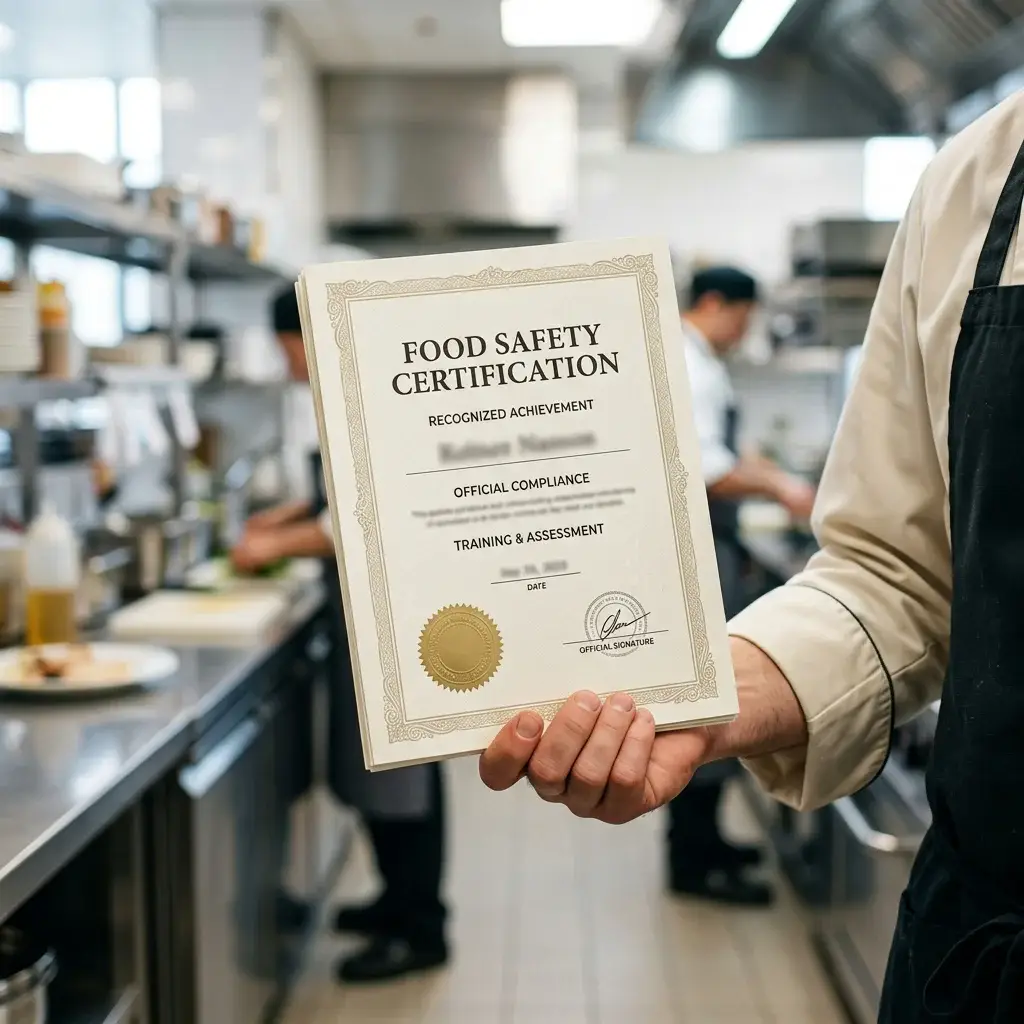
The Three Tiers of FSSAI Licensing
Not all FSSAI registrations are equal. Understanding the tier tells you a lot about the scale and seriousness of a caterer's operation:
- Basic Registration: for very small food businesses with turnover under ₹12 lakh. Rarely sufficient for corporate catering.
- State License: for medium-sized operations with turnover between ₹12 lakh and ₹20 crore. Most established Noida caterers fall here.
- Central License: for large-scale operations, multi-city businesses, or those supplying government and institutional contracts.
How to Verify Your Caterer's FSSAI License
- Ask the caterer for their 14-digit FSSAI license number
- Visit fssai.gov.in → License/Registration Verification
- Enter the number to confirm it is active and not expired
- Check that the license covers the type of food business (catering, not just retail)
What FSSAI Certification Actually Means
A licensed caterer must:
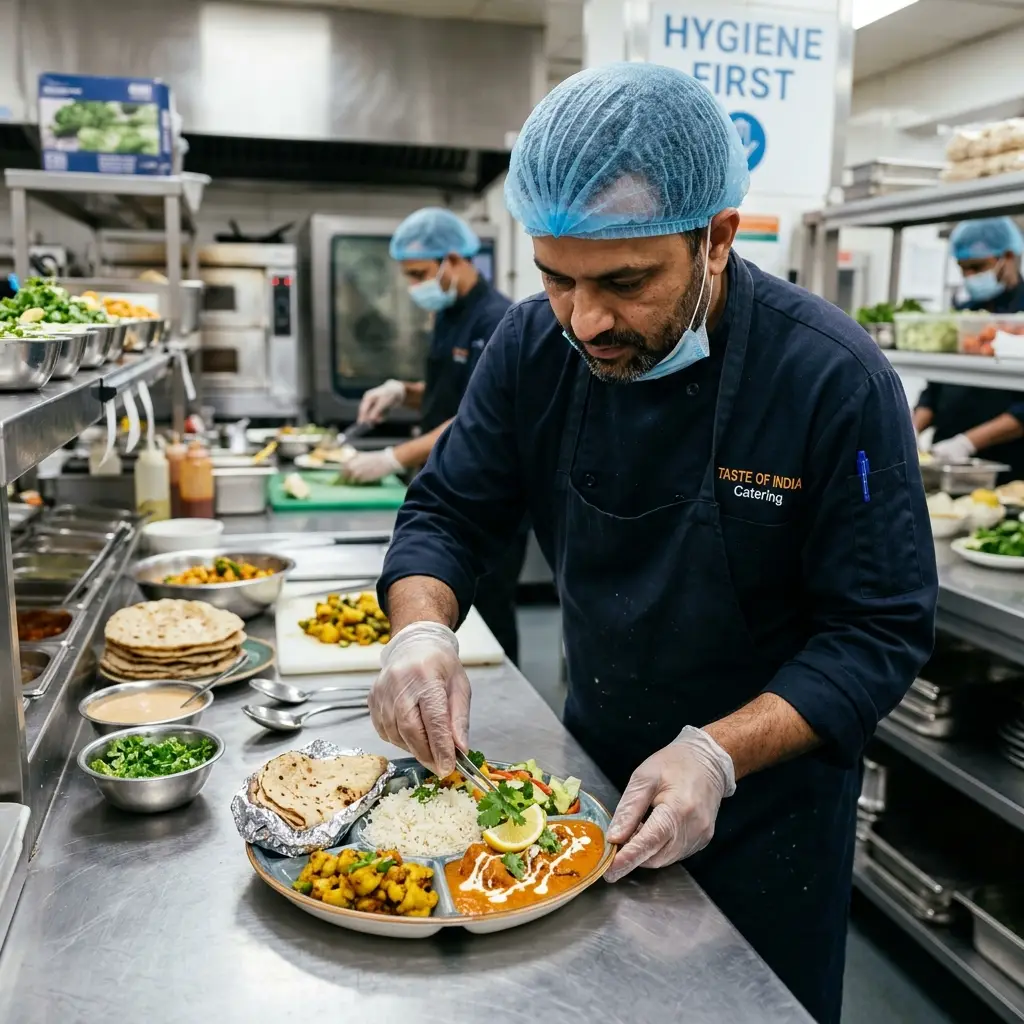
- Operate from an inspected, approved kitchen facility
- Maintain cold chain for perishables
- Conduct regular food handler health checks
- Keep sourcing records for all ingredients
- Pass random food safety inspections
- Display their license prominently at the kitchen premises
Red Flags When Evaluating Noida Caterers
- Cannot provide an FSSAI license number immediately
- Refuses a kitchen visit
- No fixed kitchen address (cooking "on-site" only)
- No food safety training records for staff
- Uses reheated or pre-packaged food passed off as freshly cooked
What Corporate HR Teams Should Ask Before Signing
| Question | Why It Matters |
|---|---|
| What is your FSSAI license number and tier? | Confirms legal eligibility and operational scale |
| When was your last hygiene audit? | Indicates ongoing compliance, not just a one-time license |
| Can we visit the kitchen unannounced? | Transparency is a strong trust signal |
| How is the cold chain maintained during transport? | Prevents bacterial growth between kitchen and office |
| Are food handlers health-checked periodically? | Reduces risk of foodborne illness outbreaks |
The Tadka Box's Food Safety Standards
The Tadka Box is a fully FSSAI-licensed corporate catering company based in Noida. Our kitchen undergoes quarterly third-party audits, all our chefs are trained in food safety protocols, and we welcome unannounced kitchen visits from our corporate clients. Food safety isn't a checkbox for us. It's built into every meal we serve.
Frequently Asked Questions
Is FSSAI certification legally required for office catering?
Yes. Any business preparing or supplying food commercially in India, including corporate caterers, must hold a valid FSSAI license under the Food Safety and Standards Act, 2006.
How can I check if an FSSAI license number is genuine?
Visit fssai.gov.in, go to License/Registration Verification, and enter the 14-digit number. A genuine, active license will show the registered business name and validity period.
What happens if a caterer operates without FSSAI certification?
It is illegal, and the business can face penalties or shutdown. For your company, it also creates liability exposure if a food safety incident affects employees.
Does The Tadka Box allow kitchen audits by corporate clients?
Yes, we welcome unannounced kitchen visits from corporate clients as part of our commitment to transparency and food safety.